
|
An early
draft of this article was edited by Archpriest Thomas Hopko, retired dean
of St. Vladimir's Orthodox Theological Seminary (OCA), and this final copy
has the approval of His Grace Lazar Puhalo (OCA), noted theologian, retired
archbishop of Ottawa, Ontario,
Canada, and abbot of New
Ostrog Monastery near Vancouver,
British Columbia.
John
Kalomiros wrote: "I read the article by P. Chopelas carefully. I
believe that it is correct. It certainly contributes to a meaningful idea
of God and to a correct understanding of the nature of Heaven and Hell. ...
the general concept that heaven and hell only represent how a man's soul
responds in the presence of the light of God is sound and patristic.
Certainly the problem of how Christians receive the teaching of the Church
on Heaven and Hell is not only a linguistic problem arising from false
translations, but it is also a conceptual and cultural problem."
Fr.
James Bernstein of St. Paul's
Antiochian Orthodox Church,
Briar, WA, wrote: "I thought that the material that you wrote on
Heaven and Hell was very good. I especially appreciated the detailed word
analysis that I intend to include in my catechetical presentation of the
subject. I present a full session on Heaven and Hell in my catechism series
which is now up to about 27 sessions!"
Pani
Frederica Mathewes-Green, author, lecturer, and wife of an Antiochian
Orthodox priest, said: "...thanks for all your hard work on this. It
is extremely helpful... God bless you..." and, "I think the
concept is fascinating and have begun incorporating this information into
my speeches."
|
The
idea that God is an angry figure who sends those He condemns to a place
called Hell, where they spend eternity in torment separated from His
presence, is missing from the Bible and unknown in the early church. While
Heaven and Hell are decidedly real, they are experiential conditions rather
than physical places, and both exist in the presence of God. In fact, nothing
exists outside the presence of God.
This
is not the way traditional Western Christianity, Roman Catholic or
Protestant, has envisioned the afterlife. In Western thought Hell is a
location, a place where God punishes the wicked, where they are cut off from
God and the Kingdom
of Heaven. Yet this
concept occurs nowhere in the Bible, and does not exist in the original
languages of the Bible.
While there is no question that according to the scriptures there is torment
and "gnashing of teeth" for the wicked, and glorification for the
righteous, and that this judgment comes from God, these destinies are not
separate destinations. The Bible indicates that everyone comes before God in
the next life, and it is because of being in God's presence that they either
suffer eternally, or experience eternal joy. In other words, both the joy of
heaven, and the torment of judgment, is caused by being eternally in the
presence of the Almighty, the perfect and unchanging God.
This is not a new interpretation or a secret truth. It has been there all
along, held by the Church from the beginning, revealed in the languages of
the Scriptures, which were spoken by the Christians of the early church era.
This understanding was held by nearly all Christians everywhere for the first
1000 years of the Church's existence, and, except where influence by western
theologies, continued to be held by Christians beyond Western Europe and America
even up to this day (including the roughly 350 million Orthodox Christians
worldwide).
When you examine in context the source words which are translated as
"hell" in English language Bibles the original understanding
becomes clear. You will find that "hell" is translated from four
different Greek and Hebrew words. These words are not interchangeable in the
original language, yet, incredibly, in English-language bibles these words
are translated differently in different places to fit the translators' theology
(rather than allow the words of scripture to determine their theology). Not
only did English translators dump these four very different words into one
meaning, they were not even consistent with it and chose to translate these
same words with different meanings in different places. It is no wonder that
English readers of the Bible are confused.
If one examines what the early Church Fathers wrote about "hell"
and the afterlife, it will be seen that they too understood that there is no
place called hell, and that both paradise and torment came from being in
God's presence in the afterlife.
When you examine what the Roman Catholic Church teaches and what most
Protestants believe about the afterlife, and compare that with the scriptures
and early Church beliefs, you find large disparities. You will also find
their innovative doctrines were not drawn from the Bible or historic Church
doctrine, but rather from the mythology of the Middle Ages, juridical
concepts, and enlightenment rationalizations, all alien to early Christian
thought.
The Afterlife According
to the Hebrew Scriptures
Sheol is one word sometimes translated as "Hell" in the Old
Testament. In Hebrew, this word is a proper noun that is a name or title, so
properly it should not have been translated but simply transliterated, as is
done with other names. The literal meaning of this Hebrew word is simply
"subterranean retreat". Sheol was not understood as a physical
place since it exists in the spirit world, but it is a spiritual "place"
associated with dead people. It was understood that when a person dies, their
body is buried, and their soul goes to reside in Sheol. That is the fate for
all people who die, both the righteous and the wicked. According to Hebrew
scholars, anything more detailed is conjecture and speculation.
Sheol was translated as "hell" in a number of places where it was
indicating a place for the wicked, which is consistent with western thought.
But it was also translated as "grave" and as "pit" in a
number of other places where it was clearly not a place of the wicked. Yet
there are other Hebrew words for grave and pit, so why did it not occur to
the translators that if the author wanted to mean pit or grave they would
have used them? It can been seen that where Sheol fit the translators' idea
of hell as a place of torment, they interpreted it one way, as hell, and
simply used the word another way if it did not, confusing those who are
trying to understand the Scriptures in translation.
In historic Jewish understanding, it is the perception of the individual in
Sheol that makes the difference. This same "place" called Sheol is
experienced by the righteous as "gen eiden", the Garden of Eden or Paradise, i.e. "heaven". Moreover, Sheol is
experienced by the wicked as the "fires of gehennom", i.e.
punishment or "hell".
What is it that causes this same place to be experienced differently by the
righteous and the wicked? According to the Jews (and by inheritance, the
Christians as well) it is the very presence of God. Since God fills all
things and dwells everywhere in the spirit world, there is nowhere apart from
Him. Moreover, evil sinners, the enemies of God, experience His presence, His
Shechinah glory, as punishment. Yet the righteous bask in that same glory,
and experience it as the love and joy of God, as Paradise.
Consider Shadrach, Meshach and Abednego, who refused to worship the idol in Babylon (Daniel 3).
They were thrown by King Nebuchadnezzer into the "fiery furnace"
which was heated "seven times more". The significance of
"seven" is a number symbolic of the "furnace" of Heaven,
the place where God dwells. The three Jews were unharmed by the fire where
one "like the Son of God" was among them. However, the same flames
of fire killed the king's "most mighty" soldiers. This is an
analogy to how the presence of God is light and warmth to those who love him,
and pain and destruction to those who oppose him, yet it is the same
"fire."
It's also useful to consider the ancient Greco-Roman pagan understanding of
the heavens and Hades. Though it was not fundamental to Hebrew theology, the
Greek view was still sometimes referenced or borrowed, because these ideas
were familiar and prevalent in the culture.
The ancient pagan Greek view, later adopted by the Romans, was that heaven
was a physical place up in the sky. The word for heaven is used
interchangeably with the location of the objects of the sky, as in
"heavenly bodies", and for the dwelling place of the gods. That is
why the Greek word for heaven and sky is the same; there was no distinction
made between them in the earliest writings, but eventually they were also
understood to be more as a metaphor for the spiritual heaven.
For the ancient pagan Greeks, Hades was a place, but was sometimes also
personified in folk mythology. The physical place was where all humans go
when they die, a site located at the center of the earth. Like Sheol, it was
the final abode of all humans, but unlike Sheol, it was taken to be a
geographic site, the literal "underworld" in folk mythology. It was
also taken as a metaphor for the place of final rest. Hades was also
sometimes taken as the name of the ruler of this place, the pagan god Hades,
also known as Pluton by the Romans.
In Greco-Roman mythology Heaven was reserved only for the gods, and after
death mere mortals could only hope to find a safe place in Hades to spend
eternity. The early Greco-Roman Hades was a very literal and even primitive
concept, compared to the Jews' more spiritual Sheol. If a person was dead,
they were in Hades, and there was no other option; only a very rare few
heroes challenged the gods of the heavens and were immortalized in the stars.
The pre-Christian Greek language had thus developed in this kind of
worldview, both heaven and Hades as a physical and literal existence up in
the sky, or down under the ground. Although these later became more
metaphorical in more developed pagan writings, from this is where the
universal concept of "up" for heaven or Paradise,
and "down" for the place of the dead came. It is used
metaphorically by both the Jews and pagans to describe mankind's relationship
with God, and so became a universal cultural concept. This is why there are
so many Biblical references to God being "up" in heaven, and Sheol
being "down" in the "under parts of the earth". However,
neither the Jews nor the early Christians took these ideas literally as the
ancient Greeks and Romans may have, but understood "up" and
"down" as spiritual rather than physical realities.
For the Jews and early Christians, even Sheol was not separated from God.
Translating directly from the Greek of the Septuagint Palms 139:7 and 8
"Where can I go away from your spirit? And away from your presence,
where can I flee? If I go up into heaven, you are there. If I go down into Hades,
there is your presence."
When Jewish scholars translated their scriptures into Greek in the third
century BC, they used the Greek word Hades interchangeably for the Hebrew
Sheol in the Septuagint. Strictly speaking, the pagan understanding was very
different, but Jewish scholars adapted "Hades" for their use. It is
one of many examples of changed, allegorical, or metaphorical non-Hebrew
words used in the Bible borrowed from Greek pagan mythology. In the New
Testament, Hades is used in a number of places as the Greek equivalent to
Sheol as well.
In the Hebrew Scriptures, or Old Testament, Sheol is translated 31 times as
Hell in the King James Bible, and similarly in the Revised Standard and NRSV.
In a number of other places it is translated as "grave" or
"pit" and once even as "dust". It appears the translators
did not have a very consistent understanding as to what Sheol means,
translating the same word differently in different places. The idea of
"Hell" as a physical place of torment, apart from the presence of
God, had already taken root, and the translation fit the preconception rather
than the original meaning of the word.
Gehennah is another word translated as "hell". It was known to the
Jews as a physical place, a valley outside to the south of Jerusalem. It literally means in Hebrew
"valley of the sons of Hennah". Here child sacrifices were once
made to the pagan god Molech. Gehennah is mentioned in 2 Chronicles 28:3 and
33:6, and Jeremiah 7:31, 19:2-6, and appears in many traditional extra-Biblical
Jewish writings. After this area came under Jewish control a memorial fire
was kept burning there. Later it became a dumping place for refuse, dead
animals, and eventually prisoners' bodies, or the bodies of the poor that
were not claimed by any family. Trash fires were kept continually burning
there for sanitary reasons. It was like many landfills: a smoky,
foul-smelling place with carrion-eating birds circling overhead.
By the time of Jesus this place became a well-known metaphor for the fate of
those condemned and judged by God. Expressions like "the fiery pit"
or the "fires of Gehennah" were equivalent to the unrighteous'
experience of God's presence. Gehennah was the place where evil and sinful
people ended up. In Jewish mystical writings it was believed that this place
is where the final destruction of the wicked would occur at Messiah's
arrival. Because this is when the resurrection would occur, all the evil
lawbreakers would be resurrected and standing in Gehennah when God reclaims
the earth. In the final battle, God's enemies, the evil ones, would be burned
up, "As wax melts before the fire, so let the wicked perish at the
presence of God" as it says in Psalm 68. Jesus affirmed and clarified
this teaching and Christians now believe this will occur on Messiah's
return.
This experience of Gehennah was used as an analogy to express what happens to
those who oppose the God of the Jews. Yet even it was not a place God
"sends" people. The fire itself was understood to be how the wicked
experienced the Shechinah glory of God, as a burning judgment fire.
Therefore, usage of this word is interchangeable with "judgment",
and quite different than Sheol. To be forgiven of your offenses was to be
rescued from "the fiery pit", or rescued from judgment. You would
still go to Sheol until the resurrection, but in glory rather than in
torment.
Notice however that in English, the translators rendered Gehennah as the
"valley the sons of Hennah" in some places in the scriptures and in
other places as "hell," rather than just making a direct
translation of the words wherever it appears. This confuses the reader, who
could get a more consistent understanding of the meaning of the word if it
was rendered accurately as "Gehennah" every time, or more properly
as "the Valley of the Sons of Hennah".
There are numerous references to God's presence being like fire in the Hebrew
Scriptures. In addition, before the invention of the electric light, any
reference to "light" meant "fire" in one form or another.
For example, "The Lord thy God is a consuming fire" (Numbers); God
"…appeared to [Moses] in a flame of fire out of the midst of the
bush," (Exodus); "The fire of the Lord burns among them"
(Numbers); "the Lord descends upon it in fire" (Exodus); "You
have refined us as silver in a fire" (Psalms); and "Who makes His
angels spirits, His ministers a flame of fire" (Psalms). These are a few
of the many Old Testament references to God being perceived as fire; it was
how the Jews understood humans experience God's Shechinah glory.
No human could bear to look at the blazing holy presence of God: not Moses,
who hid his face, not Abraham, not Adam or Eve after they fell from Grace. No
human could look at the face of God and live to tell about it.
God is described as fire in the following verses; Gen 19:24, Ex 3:2, 9:23,
13;21-22, 19:18, Num 11:1-3, 4:24, Ne 9:12, Ps 66:10, 104:4, Is 66:15, among
others places.
Another interesting word study to examine is the Hebrew words used in the Old
Testament when describing how God "punishes" people in the English
bibles. Ten different Hebrew words are translated as "punish" in
this context, yet none carries our meaning of punishment in English. The most
common word "paqad" rendered 31 times as punish, simply means
"to visit" or "to remember." The word "anash"
[used 5 times] simply means "to urge" or "compel",
"chasak" [occurs 3 times] means to restrain, "avown"
[used 12 times] means sin. This also implies the cost or penalty for being
evil or causing offence. One interesting word translated as punish,
"yakar" means to chastise, but also means "to add value"
as in chastising a child makes him more valuable. There are a few others
words rendered as punish, but they occur only once each. As can be seen, none
of these words clearly indicates that God does the punishing. Apparently for
the translators, every time God visits or remembers His people, he is
"punishing" them, but that is not how Jews understand this word.
Nor would Jews automatically assume that a visit from God was a bad thing, either.
This kind of translation seems attributable to a presupposition of what these
words mean, and intrinsically changes the meanings of these words from the
original intent. The translators' own incorrect ideas have clouded their
objectivity, an all-too-frequent occurrence with virtually all Western
language Bibles.
The Afterlife According
to the New Testament
Jesus and the Apostles were all Jews of course, as were nearly all the
members of the first Christian Church. The first Christians saw themselves as
inheritors of the covenant of Abraham, and the early Church of course had no
New Testament, so they naturally understood the afterlife in the terms of the
Old Testament. The Gospels and all of the epistles affirm this understanding
as well, when read in the original Greek.
In the Gospel story of Lazarus and the Rich Man, Jesus clearly states that
they both end up in the same place, in Hades. Hades of course is used to mean
the same thing as Hebrew "Sheol," it simply means the place
everyone goes when they die. In Hades they can see each other and talk to
each other, although they are far off from each other. "And in Hades, he
lifts up his eyes, being in torment, and sees Abraham far off, and Lazarus in
his bosom." [Luke 16:23]. All of them are in Hades, Lazarus received bad
things, but now he is comforted, and you are in pain". See how he
contrasts "but now" (in death), one is comforted, the other in
torment. Neither does it says that God is punishing him, he is simply
"in pain" while there. They were separated by a large gulf, but it
is clearly spiritual and not physical, since they are not in the
physical world, for neither would the Rich Man have a physical tongue to cool
with physical water from Lazarus' physical finger. So it is a gulf that
exists in the heart, a spiritual gulf that causes us to experience God's
loving presence as paradise or torment. A gulf that was not placed there by
God, but rather created by the choices and actions of the sinner.
Hades is translated as hell ten times in the New Testament, but it is also
translated as "grave" in 1 Cor 15:55, another point of
inconsistency.
In Revelation Chapter 20, it states that Death and Hades gave up their dead,
and Death and Hades are placed in the lake of fire when God reclaims the
world. If the ones in Hades were judged and will be in torment for eternity
"far from the Lord" as so many think, why would these same ones be
released from Hades when God returns? It is because all who have died reside
in "Death and Hades" until that moment, when Death and Hades can no
longer exist because God is present. The "lake of fire and
brimstone" into which Death and Hades is placed, in the Greek would be
grammatically correct to translate as the "lake of fire and
divinity", or even "the lake of divine fire". When Death and
Hades is placed in the fiery presence of God, in the "lake of divine
fire", it is destroyed, because it is in the very presence of God, death
cannot exist when God is present.
It is interesting to examine the Greek word for "divine", it is
from the Greek "theion", which could also mean "divine
being", but also means "sulfur', or in Old English
"brimstone" [lit. 'burning stone']. As strange as that sounds to
us, it is because of the ancient understanding of the cosmic order of the
nature of all things. All people in all cultures from the Near East to the
West understood that there were four 'elements', these were: Earth, Air,
Fire, and Water. Their nature was that Earth and Water tended to go down
toward Hades, and Air and Fire tended to go up toward heaven. This could
plainly be seen when the heavenly fire, lighting, would hit a living tree and
burn the "life" out of it. Anyone could see that the heat from the
tree would go back to heaven in the fire, and the ash that remained would go
down into the ground. But there was this mysterious yellowish earth substance
that behaved very differently, when placed in a fire it burn so brightly that
your eyes could not bear to look at it. As it burned, it would release the
heavenly substance that was trapped inside and it would rise back to heaven.
Clearly, this "burning stone" was a divine substance, and as such,
it was simply called "divinity. It was burned within a new temple to
"purify" it before consecration, presumably when this burning stone
released it's divinity, it causes all evil things to flee from the temple,
and thus was the temple readied for worship.
Yet the word 'theion' is translated as "brimstone" or
"sulfur" in Luke 17:29, Rev. 9:17, 14:10, 20:10, 21:8, which is
where 'fire and brimstone' comes out of heaven, but it is equally interchange
with the words "divine fire". Since this did not fit the
translators' preconceived ideas, it is rendered always as brimstone in this
context.
Elsewhere in Revelation it states that the "heat comes out of heaven"
and burns the enemies of God, yet does not harm the ones with God's seal on
their foreheads. So the same heat, the heat that is the very life and light
that comes from God, burns the sinners, and does not harm the ones that love
God.
Again, in many places God's presence and appearance is described as fire in
the New Testament as well as in the Old. Examine for example, Matt 31:10-12,
25:41, Mark 9:49, Luke 12:49, Act 7:30, 1Cor 3:15, Heb 1:7, 12:29, Rev 3:18
and in numerous other places.
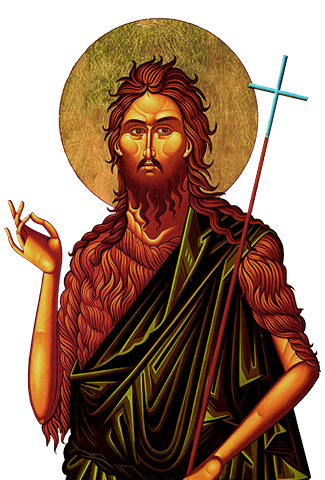
Typical is the verse where John the Baptist says "I baptize you with
water, but the One that comes after me will baptize you with fire". The
author of Hebrews writes that God is a consuming fire. Paul also writes that
God is like the jeweler who burns gold in the fire to purify it. Jesus
Himself states the he brings "fire" to the earth. That is,
"divine fire".
Everywhere in the New Testament when humans come face to face with the
Transfigured Jesus they cannot look at Him: Peter, James and John on Mt.
Tabor, Paul on the road to Damascus-- humans hid their face and fell down in
fear and trembling when confronted with the revelation of Jesus as Almighty
God. Old Testament figures did the same, but now, in the New Testament, it is
revealed that this "holy" fire is present when Jesus reveals his
nature. This is because Jesus is the incarnate God of the Old Testament.
A couple of these descriptions of the fire of God's presence are worth
examining closely. Paul writes in 1 Cor 3:13 "Every man's work shall be
made manifest…because it shall be revealed by fire, and the fire shall try
every man's work of what sort it is." In Mark 9:49 Jesus says "For
everyone will be salted with fire" (interestingly, in Greek this
sentence has the grammatical structure of an obvious statement of fact,
similar to "for [everyone knows that] everyone will be salted with
fire"). Peter repeats this idea in 2Peter 3:7 "but now, by the same
Word [that is Jesus], heaven and earth are saved and kept for fire on the day
of judgment, and the destruction of impious men."
So clearly everyone experiences this fire caused by the presence of God. The
Bible tells us there is no place apart from God; that he is everywhere and
fills all things, so how can He create a place apart from Him? Moreover, why
would He create a place just to punish the ones He says He loves
unconditionally? That is not the nature of a loving God.
Since God is everywhere and fills all things, in the spirit world there is
nowhere to escape from God even if you wanted to [Ps 139:7-8].
Translating 2 Thessalonians 1:7-8 from the Greek literally, St. Paul tells
the persecuted Thessalonians that they will "get relief at the
revelation of the Lord Jesus coming out from heaven with His powerful angels
in flames of fire". Yet this same presence of Jesus causes the ones
persecuting them to "…be punished with everlasting destruction BECAUSE
OF [Gr. "apo"] the presence of the Lord, and BECAUSE OF His
mighty Glory" (2 Thess 1:9). Further on Paul writes in 2Thess 2:8
that "the lawless one, whom the Lord Jesus will destroy by the breath
[or "spirit"] of his mouth and make ineffective by the fantastic
appearance of his presence". So the mere presence of Jesus makes the
"lawless one" ineffective, yet gives relief and comfort to the
Thessalonians.
Unfortunately many English translations insert a word that is not there in
the Greek in verse 1:9, adding the idea that the wicked will be
"separated" or "cut off" from the Lord's presence. This
is a totally different meaning, and if Paul had wanted to say this he would
have used the word "schizo," which is where we get the word for
"scissors" and "schizophrenia" [lit. divided-mind]. The
Greek word "apo" that Paul uses here is a preposition that
indicates cause or direction: "because of," "out of,"
"caused by," "from," etc. The word "apo"
appears 442 times in the New Testament, and it is NEVER used to indicate
separation, location or position. For example "Apostles" in Greek
"apo-stolon" literally means "those sent out from the
fleet." The word "Apocalypse" literally means "out from
cover," i.e. to reveal, hence the Book of Revelation. Also interesting
is the word "apostate" which in Greek literally means "out
from standing". If you where once in a condition to stand in God's
presence, then "fell" away, you would not be able to stand any
longer; you would be "out from standing," cowering and trying to
hide from His presence.
The history of the English word "hell" is also revealing. The Old
English word from which hell is derived is "helan", which means to
hide or cover, and is a verb. So at one time the English church understood
that to be judged a sinner meant one would cower and want to hide in fear
when in God's presence. Unfortunately, because of the political expedience of
controlling an often rebellious population, corrupt rules in the West, in
collusion with corrupt clergy, and adopting ideas from non-Biblical yet
popular fantasy novels such as Dante's Inferno, corrupted the use of this
word during the middle ages. Eventually turning a verb into a noun by popular
usage, even if theologically insupportable from the Bible.
It is tragic that modern translators would insert the word "far
from" or "cut off from" into 2 Thess 1:9, apparently because
they had a preconception about what Paul was trying to say so they altered
the text to fit. They added this little "clarifying" word that is
not in the Greek text at all, changing the meaning and inserting their own
ideas. If your preconceived idea is that Hell is a "place" that
an angry God sends people away from his presence, in order to punish and hurt
them, you would expect and look for ways that Scripture would support your
idea.
Clearly, when you read the Bible in the original languages you learn that
there is no place apart from God, and there is no place that God puts you to
punish you. What scripture reveals is that all eventually will be in the
fiery presence of the Lord, and this presence will be either "eternal
torment" or "comfort and glory". Judgment and paradise
both come from being in God's presence. (The Presence of God’s Glory)
Another word translated incorrectly as Hell appears in 2 Peter 2:4. Saint
Peter is warning about the swift destruction of false prophets and false
teachers. In the Greek grammar he uses an obvious statement of fact by
stating "For if God did not spare the sinning angels, but rather places
them down in Tartarus, reserved for [a future] judgment…the Lord knows how to
deliver the godly out of trials, and to reserve the unjust until the day of
judgment." [2:9].
The word Tartarus is also a proper noun, that is a name of a place, and
accordingly should not be changed into a different word, and certainly not
the same word that used for Hades and Gehennah.
Tartarus originally came from Greek mythology and popular folk tales. It is
the name of a prison in Hades that Zeus, after triumphing over the Titans,
placed them, bound in chains to hold them for future punishment for crimes
against humans. It was metaphorically seen as the place where justice was
metered out in the spirit world, and this metaphor often found it's way into
Jewish apocryphal writings about the end times. Saint Peter borrows this term
and uses it in exactly the same way as it was used in popular contemporary
writings by both Greeks and Jews; it is a place where "sinning angels"
are bound and imprisoned, awaiting a future punishment. They are bound by God
to prevent them from doing further harm, and they are judged for crimes
against humanity. This image is seen in the ancient icon of the Resurrection,
metaphorically depicted are "dark" angels, or demons, being bound
in chains under the feet of the resurrected Christ, who broke the bonds of
death and rendered powerless the "sinning angels". Remember from 2
Thessalonians, where Saint Paul writes that the power of the presence of
Christ made the "lawless One" powerless, and gave comfort to the
Christians, which is exactly the same idea that Saint Peter is writing about
in 2 Peter 2:4 through 9.
Again the translators made an improper interpretation of this passage because
of preconceived ideas about the afterlife, changing the meaning and only
adding to the confusion for English speaking Christians.
Also totally absent from the scriptures is any hint that demons are
tormenting sinners. This again comes from Dante's Inferno and other pagan
concepts, not from the Bible. Because any "sinning angels" in the
presence of God, are also in torment, and their power is made ineffective.
The Afterlife According
to the Church Fathers
After the Gospels and Epistles were composed, in the centuries before
Christians decided exactly which books would be in the New Testament, many
gifted believers wrote books of commentary, sermons, apologetics, and stories
of martyrdom. These eloquent early Christian writers confirm the Biblical
view of the afterlife and add some clarifying details.
St. Ignatious of Antioch, in the late first and early second century,
describes God as the furnace that a craftsman uses to temper a sword. When a
properly prepared sword is placed within the fire, it makes it stronger and
the sword takes on the properties of the fire, it gives off heat and light.
However, this same fire will melt and destroy a sword that was not properly
prepared.
St. Isaac the Syrian in the sixth century writes "Paradise is the love
of God" and he also writes "...those who are punished in Gehannah,
are scourged by the scourge of love". So the "fire" is the
love of God, and we experience His love as either divine love, or as painful
"scourge".
St. Basil the Great (fourth century) points out that the Three Children
thrown into the fiery furnace were unharmed by the fire, yet the same
fire burned and killed the servants at the entrance to the
furnace.
According to St Gregory the Theologian, God Himself is Paradise and
punishment for man, since each man tastes God's "energies" (His
perceptible presence) according to the condition of his soul. St. Gregory
further advises the next life will be "light for those whose mind is
purified... in proportion to their degree of purity" and darkness
"to those who have blinded their ruling organ [meaning the
"mind"]...in proportion to their blindness..."
St. Cyril of Jerusalem writes about the Second Coming of Christ, "the
sign of the Cross [at His returning] will be terror to His foes, but joy to
His friends who have believed in Him".
Lactantius (AD 260-330) wrote that on His return "there comes before Him
an unquenchable fire".
St. John Chrysostom (AD 344-407) wrote [in homily LXXVI] "let us clothe
ourselves with spiritual fire, let us gird ourselves with its flame. No man
who bears flame fears those who meet him; be it wild beast, be it man, be it
snares innumerable, so long as he is armed with fire, all things stand out of
his way, all things retire. The flame is intolerable, the fire cannot be
endured; it consumes all. With this fire let us clothe ourselves, offering up
glory to our Lord Jesus Christ, with whom the Father, together with the Holy
Spirit, be glory, might, honor, now and ever and world without end.
Amen."
A prayer of St. Simeon the Translator goes: "...Thou who art a fire
consuming the unworthy, consume me not, O my Creator, but rather pass through
all my body parts, into all my joints, my veins, my heart. Burn Thou the
thorns of all my transgressions, Cleanse my soul and hallow Thou my thoughts [etc.]
...that from me, every evil deed and every passion may flee as from
fire…"
The Holy Orthodox Church, in keeping with Scripture and the most ancient
Christian doctrine, teaches that all people come into the presence of God in
the afterlife. Some will bask in joy because of that infinite love, glory,
light, power, and truth that is Almighty God. Others will cower in fear and
be in torment DUE TO THAT SAME PRESENCE. All the same, there will be some
kind of separation or "great gulf".
"Life" in the Orthodox Church as defined by the Fathers, is
experiencing the perfect, pure and infinite love of God in ultimate harmony
and intimacy for eternity, and "death" is experiencing God's
energies in torment, darkness and disharmony for eternity. It is only through
Christ that we come to that place of perfect harmony, in this life, in this
world. The goal of the Christian is not to get to "heaven" in
the after life, but rather to come to a state of constant communion with the
Holy Spirit, beginning in this life. We may bask in the presence of God's
glory here and now, and in the afterlife for eternity.
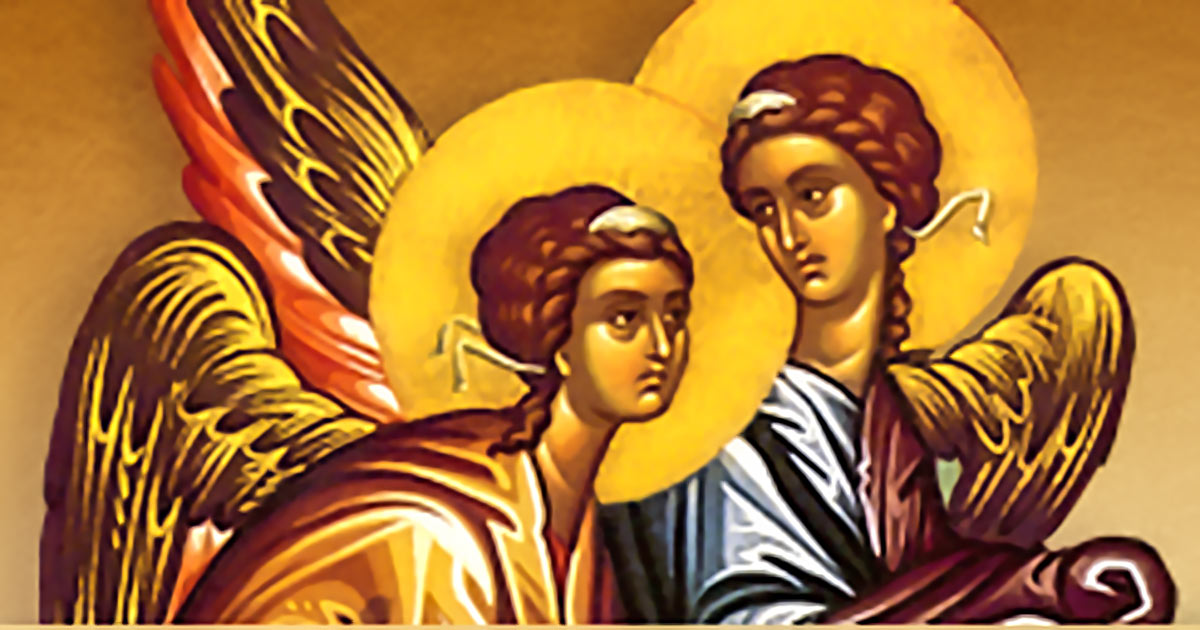
Accordingly, from ancient times icons have shown the Saints dwelling in a
place filled with the golden, uncreated divine light of God. With the icon we
symbolically peer through this "window" into the spirit realm
infused with God's energies. In the icon of the Heavenly Kingdom, we see
Christ enthroned in the center as God Almighty, surround with the host of
angels, His mother the Theotokos, and all the saints. However, at His feet
you see others, also in His presence, who are being burned and tormented due
to just being there, and have no escape. The larger more elaborate icons of
the Resurrection show the Old Testament saints with halos looking on with
joy, and others without halos on the other side of the gulf, looking on in
fear and confusion, as Christ frees the captives of Death. He rescues all of
humanity (represented by Adam and Eve being pulled from the tomb) and all of
creation with them, from the beginning of time to the end of time.
It is not God's intention that his love will torment us, but that will be the
inevitable result of pursuing our own selfish desires instead of seeking God.
When we are in harmony with God, we will bask in that presence. Yet, if we
desire our own will and are in disharmony with God, we suffer in His
presence. Satan is evil not just because he harms others, but because he is
an angel of light who stands in the presence of God yet chooses to pursue his
own selfish desires, which causes him to tremble in fear. Satan and his
fallen angels, the demons, were thrown to the earth and he became the 'god of
this world'. It can be speculated that Satan and his demons are on the earth
because it is the only place they can escape God's presence, if only
temporarily. This is why they will suffer for eternity after God reclaims the
world at the end of this age, filling It with his presence. Then there will
be nowhere to escape God, for both demons and evildoers.
So "hell" is not a "place" but rather a condition we
allow ourselves to be in, not because of God's "justice" but
because of our own selfish and sinful disobedience. In other words, we
put ourselves in "hell" when we do anything other than seeking
God's will. It is not that God wants to harm us; He loves us unconditionally,
but torment is the result of coming into His pure presence when we are in an
impure condition.
It is like spending your whole life in a cave or basement in darkness, never
seeing the sun, then suddenly being thrust into bright sunshine. Your skin
will burn, your eyes will burn, you will want to bury yourself under the
rocks to try and escape this terrible thing pouring down on you, but there is
no escape, just as described in Revelation. However, if you expose yourself to
the sun regularly and often, eventually you will want nothing but to bask it
the warmth and light of the sunshine. The same sunshine that torments one
person brings warmth and pleasure to another. Similarly, if you get too close
to the sun, you will be burned, not because the sun wants to burn you,
because it is the sun's nature.
Roman Catholic and
Protestant Understanding
It is clear from the Scriptures and the Church Fathers there is no room in
the afterlife for Purgatory, limbo, or any place apart from God, nor for
Calvin's idea of predestination and "divine justice".
Neither in scripture, nor in the writings of the Saints do we see any such
innovation as Purgatory or even of Hell as a place of torment apart from
God.
Purgatory, according to the "Catechism of the Catholic Church"
article 1030-1031, is defined as the place of "All who die in God's
grace and friendship, but still imperfectly purified…after death they undergo
purification, so as to achieve the holiness necessary to enter the joy of heaven."
The more purging that is necessary, the longer one must spend in purgatory.
Further, in article 1032, "The Church also commends almsgiving,
indulgences, and works of penance undertaken on behalf of the dead…"
presumably to hasten how quickly one may complete this purging.
Built into this uniquely Roman Catholic doctrine is the assumption that in
the afterlife we would experience time passing the same way we do in the
physical world. This is a mistake because there are enough hints in Scripture
that time as we know it does not exist in the spirit world. For example:
"… one day with the Lord is as a thousand years, and a thousand years as
one day". (2 Peter 3:8). Also the idea that the return of Christ is
immanent, in addition to the prevalent use of the word 'eternal' throughout
the Old and New Testaments. In the Revelation of St. John many scholars
believe that St. John is not describing sequential events (which would be
nonsensical, since the narrative jumps around so much) but the Saint is
rather seeing all the events occurring simultaneously. It is like he is in a
room with all this activity happening at once, and he says "then I
turned and I saw…". He is describing the sequence in which he sees the
visions, but that is not necessarily in the order that the events occurred.
Even modern science tells us that time and space are connected. Without
physical space [i.e. creation], there is no time.
So it is very speculative to assume that time passes outside of creation the
same way it does here. No sound doctrine can be built based on this
assumption.
The Orthodox believe, from Scripture and the writings of the saints, that
because God is perfect he does not change. However, imperfect humanity
continues to change. So when someone in an imperfect "forever
changing" condition comes into God's pure unchanging presence, it is
experienced as darkness and torment. Presumably, at the time of death we lose
the ability to change, since our condition will be "consolidated"
by being "caught" in the pure, unchanging presence of God, which
will also occur to the living at the Apocalypse. The idea of changing in
Purgatory is incompatible with the timeless, changeless nature of the
afterlife.
Furthermore, nowhere in the original language of the Bible does the Calvinistic
idea occur of a place of "hellfire" torment, created especially by
God so He can punish those he judges for eternity. Why would a God who
loves us unconditionally torment us for eternity, because of an equally
unbiblical notion of Divine Justice? In fact nowhere in the Bible does it
explicitly state that it is God that punishes the sinners. If you put your
hand in the fireplace, is it the fire's intention to punish you? Or is the
torment you experience caused by your own foolish action? It is merely the
nature of the fire to burn your unprotected skin.
Uncreated Energies
The
understanding of heaven and "punishment" [hell] in historic
Christianity is inextricably linked to the biblical concept of the Uncreated
Light of God. The Uncreated Energies (or "Light" the purest form of
energy) are understood by the Orthodox to be the Energies of God. This Energy
is the "consuming fire", the Shechinah glory, the fire that burns
gold to purify it, as St. Paul writes. It is the fire that burns the weeds
left in the field, the fire that burns the pruned branches, it is the lake of
divine fire, and the thirst and burning that torments the Rich Man is this
same Uncreated Energy. Yet, the same fire that torments the impure gives
warmth and comfort to the pure of heart.
In fact the Greek word "energeia", and it's various forms, appears
over 30 times in the new Testament, yet it is not translated as
"energy" even once in most popular English translations. It is
variously rendered as operation, strong, do, in-working, effectual, be mighty
in, shew forth self, and even simply dropped out of the sentence; everything
except what it means. Yet, this word was well established in the Greek
language in the first century. It was first used by Aristotle, some three
centuries before Christ, as a noun, as "energy" in the metaphysical
sense- which was borrowed in recent years in English as an engineering term.
But even in a modern metaphysical sense, it is exactly as the ancient Greeks
use the word, because it is the same word. Yet the translators insisted on
ignoring how this word is actually used by Greek speakers and distorted it
into a number of verbs and adjectives (or simply drop it from the verse),
which leaves only confusion and misunderstanding for English readers.
When we are energized by the Divine Energies, we will radiate the pure Light
of God. Translating directly from the Greek, Saint Paul writes to the
Philippians [2:13] "For it is God who is energizing in you, according to
His will and to energize for the sake of His being well-pleased." In
verse 3:21 he further writes "[Christ] who will change the appearance of
our humble bodies to take on the form of the body of His glory, through the
energization of his Power…" And to the Ephesians in verse 1:19 "and
what exceeding greatness of his power, in us who believe, through the
energization of His mighty strength, energized in Christ, raising him from
the dead and seating him in the right hand of Him in the heavens" So
this energy "in us" changes our bodies to glory, and was the same
energy that raised Christ from the dead. This energy is in fact, the Grace of
God, in Eph 3:7 St. Paul writes "That I was made an attendant through
the gift of the Grace of God, granted to me by the energization of his
Power".
This same Energy also has the power to heal, as St. James writes [5:16]
"Therefore confess your sins to one another, and pray for one another,
so that you may be healed, prayers energized by a righteous one are very
powerful". This same energy comes from the "one" that restrains
evil, in II Thess 2:7 St. Paul writes "For already the mysterious
lawless one is only restrained now by the Energies, until he comes out of the
midst of it"
Receiving this Divine Energy is the results of faith in the true God, as St.
Paul tells the Thessalonians in I Thess 2:12 "…[you received] …the true
Logos of God, which also energizes in you believers". Moreover, to the
Galatians he asks a rhetorical question with an obvious answer [3:5]
"Indeed, would it not be in vain, if the One providing you the Spirit
and the powerful Energies in you, were by works of the law, or rather by
hearing in faith?"
There are many stories in the historic tradition, both ancient and relatively
modern, that tell of the saints radiating light when they pray (for example St.
Mary of Egypt, St. Sava, St. Mathew of Ethiopia, and others). The Light that
Christ radiated on mount Tabor during the Transfiguration is this Uncreated
Light, seen in Christ revealing his true nature. The halos in icons are not
rings or crowns (as often wrongly represented in western religious art) but
rather a sphere of light, like the sphere of light around a candle in a dark
room. This light that Christ, his mother the Theotokos, the angels and saints
radiate in the icon is this Uncreated Light of God.
This is the Transforming Light that "makes all things new".
Salvation is in fact this Energy assimilating us to God,
"divinizing" the believers, making us "Christ-like",
through the Energization of the Power of God. When we are in perfect harmony
with God, the Holy Spirit energizes within us, and we too radiate this
Uncreated Light. All of the saints radiate this Light of Christ.
Interestingly, in properly rendered icons none of the Apostles have halos
until after Pentecost, when the Holy Spirit was poured out into the Church.
This event, the Pentecost, is when the Apostles were "assimilated"
into divination, transforming them [literally in the Greek
"metamorphoses"] into Holy beings, into "non-earthy ones"
(lit. in the Greek), and when, according to Tradition, the Holy Church had
begun.
The Energy is Uncreated because it existed before creation, it is the Light
and Truth and the Love and the Life that IS God. When we have that Truth,
Love and Life of God, than we too will radiate this Divine Light.
The ancients understood that light was the purest form of energy. This is why
there are so many biblical allusions to the sun for God. The sun was the
source of "pure" light, life and heat, and this created light was
likened to the Uncreated Light of God, the source of Everlasting
"Zoe" and "Zesty", spiritual "life" and
"heat" or more properly "vitality". This is why the term
"illuminated" is used to describe the saints who saw these
"divinizing" Visions in Heaven. In fact, it is impossible to
properly understand the role of Light in theology if you do not understand it
from the Light-Energy perspective.
Yet, Saint Paul also cautions the Roman about this Energy in 7:5 "for
when we were in the flesh, passionate for sins according to the law, the
Energy in our members brings fourth the fruit of death". And likewise he
warns the Corinthians [II Cor 4:12] "For this reason it energizes death
in us, though it is Life in you". And in Hebrews 4:12 another sober
warning "For the living Logos of God, and [the living] Energies, also
sharper than a two edged sword, passing through, dividing both soul and
spirit, joints from marrows, judging the thought and intents of the
heart". Note in this last verse in English bibles, the word
"Energies" is just dropped from the text, yet the clear implication
in the Greek is that the "logos" is one edge, and the
"energy" is the other edge of the sword. Implying quite literally,
without this Energy, one is not fully armed.
When we come face to face with this powerful Uncreated Light in an impure and
sinful condition, we cower in fear and pain, for our impurities are revealed
and "burned" by this illuminating Energy. Yet those who love God
and want nothing but to be in constant communion with God, will strive
towards purity and will bask in glory in this same Light. The same Energy
that causes eternal death in the sinful, purifies and strengthens the
faithful.
This is at the root of difference between the Eastern Orthodox and Western
Christianity, whether Protestant or Roman Catholic, this biblical concept of
the Uncreated Energies of God. In the west, the mystery of the Divine
Energies was abandoned because it could not be understood outside of the
metaphysical perspective, and therefore juridical socialistic rationalism was
adopted. The west continues to flounder in darkness and is unarmed against
the influence of the enemies of God, and therefore continues to innovate
false theologies.
Tragically, in the west a few centuries after the Great Schism (1054 AD) an
innovation (i.e. heresy) developed as a result of an attempt to rationalize
God's purifying fires. Latin theologians surmised that God created a place
called purgatory with purging fires to "purify" those that die with
imperfect atonement, and they further rationalized that paying indulgences
could buy your loved ones out of these painful purging fires faster. This
rationalization also helped keep the church prosperous and coffers
full.
The western ideas had its roots in Augustinian theology (who was influenced
by the Greek pagan philosophers). Unfortunately Augustine could not read
Greek and had to devise his own theology from imperfect Latin translations.
Late in his life he recanted much of his earlier writings, an act which was
ignored in the West. Both Luther and Calvin developed their own theologies
from Augustine's erroneous writings, and ignoring Augustine's later
retraction. This is how the pagan notion of a God that both punishes and
rewards made its way into western Christian theologies. Another major
influence was the 13th century fantasy novelist Dante, who's political satire
known as the Inferno borrowed heavily from pagan mythology and bears little
resemblance to Biblical eschatology.
Some Orthodox would contend that the western God, who both claims to love us,
but also would condemn us to eternal punishment, is a schizophrenic God. It
is reminiscent of the abusive groom who claims to love his bride but can not
stop punishing her.
Calvin further rationalized if God is all knowing, then He knows who will be
saved and who will not even before they are born, so therefore He must have
created some people just so He can torment them in Hell for eternity. This is
the infamous "predestination" of Calvin, which makes God the author
of evil. This is not Biblical and certainly not Christian. Ultimately this
doctrine denies free will, the choice that all humans have to either pursue
righteousness, or selfishness.
Therefore the difference in the understanding of the Uncreated Energies is
not just a difference between Roman Catholicism and Orthodoxy, it is a
difference between almost all of the heterodox and the Orthodox.
In Conclusion
There is no "place" of torment, or even a "place" apart
from God, because there is no "place" at all; you are outside of
time and space. The "place" is actually a condition of either
punishment ("hell") or paradise ("heaven") depending on
how you experience the presence of God and His Uncreated Energies.
Consider a person who hates God, and anything to do with religion, and has
done nothing but pursued his own self-centered desires all his life. It would
be far more terrifying, and painful, to spend eternity in the fiery embrace
of God's almighty and divine love with no escape, than to be far from
Him.
Experiencing God's presence and His in-filling transforming Energies in glory
or in torment, as Paradise or as Punishment, is the heaven and hell of the
Bible. Not something God did to us, but rather something we did to ourselves.
God unconditionally pours out His love on all, WHETHER WE WANT IT OR NOT,
whether we are ready for it or not, when we enter the afterlife. This is why
the Gospel or "good news" of Jesus Christ should be shared with all
people, of all nations, in all tongues. For there is nothing to fear from
God's perfect love, since love casts out all fear.
However, it is not totally wrong to understand the after life as
"type" of Heaven and Hell. Because from each individual's
perspective, it will not be perceived as the same "place", but
rather as either torment and darkness you can not escape, or as the paradise
you have always longed for. For those judged, they will experience God's
presence as eternal darkness and torment. Though it is very important to keep
in mind what is the cause of either of these conditions, or one could reach very
wrong conclusions about the nature of God, as they have in western
theologies. To misrepresent the nature of a loving God would cause one to
conclude that it was God's intention to punish his creation. Indeed, one
blasphemes the reputation of the God of the Bible when you make him into an
angry vengeful god that punishes His creation. The cause of the torment is
the poor choices that we make, not God. If one thinks of these two different
"places" as conditions that we choose to be in, rather than
"compartments" God puts us in, it would be more accurate.
And it will certainly be "paradise" to finally experience His
Divine Love up close and in person for those who seek it. It is all in the
perception.
Such is the nature of a loving God. For God is God.
|